
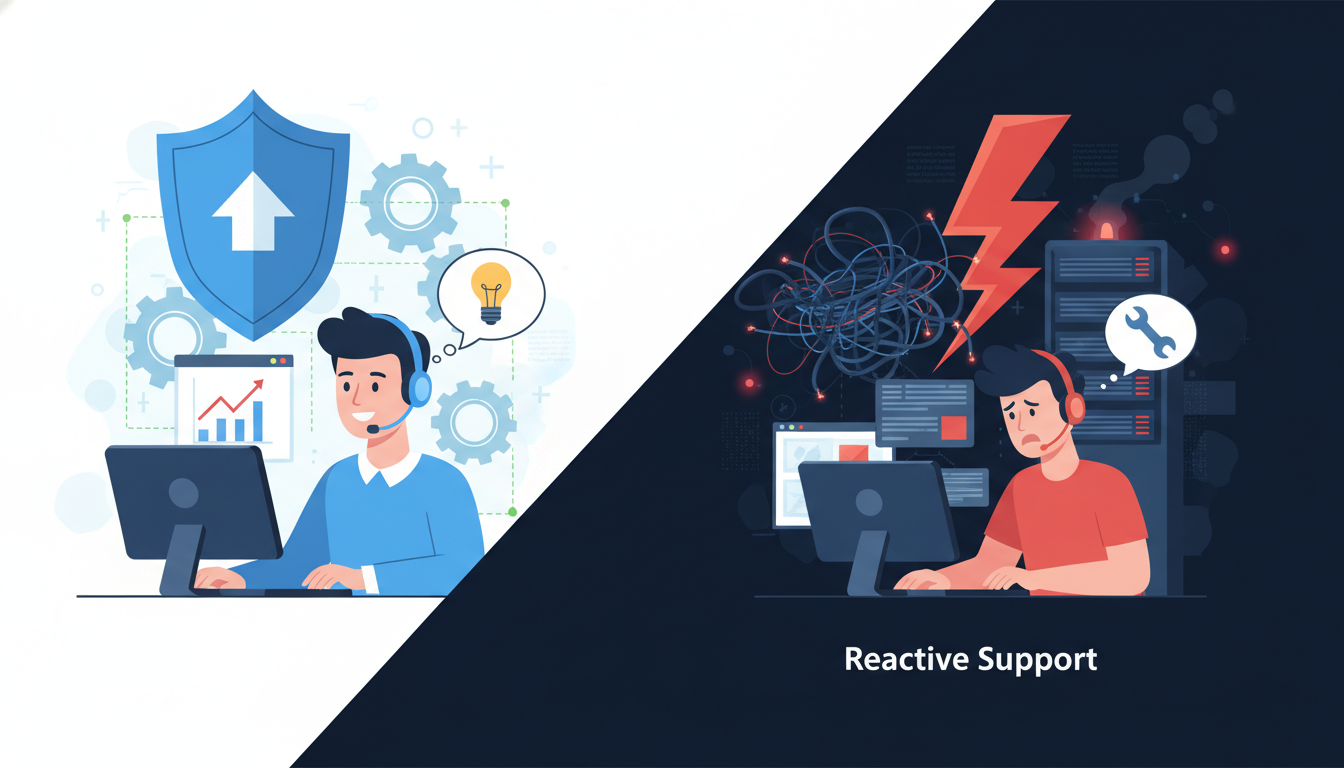
Proactive vs Reactive Support Models
Understanding the difference between these two approaches helps organizations improve efficiency, reduce churn, and create stronger customer relationships.
What Is Reactive Support?
This model focuses on issue resolution rather than prevention. While it is necessary for handling unexpected problems, relying solely on reactive support can lead to longer response times, higher ticket volumes, and increased customer frustration.
Businesses offering customer support services must ensure their reactive systems are structured, efficient, and properly staffed to maintain service quality.
What Is Proactive Support?
Examples include sending onboarding guidance, notifying customers about potential disruptions, providing educational resources, or resolving technical risks before they escalate.
Proactive strategies often leverage tools like 24/7 live chat customer support to engage users in real time and reduce friction early in the customer journey.
Key Differences Between Proactive and Reactive Support
Reactive models typically measure performance through response time and resolution rates. Proactive models prioritize customer engagement, satisfaction improvement, and churn reduction.
While reactive support is essential, businesses that adopt proactive strategies reduce ticket volume, increase customer confidence, and improve long-term retention.
Business Impact of Reactive Support
High complaint rates often indicate deeper product or communication gaps. Without proactive measures, businesses risk increased churn and declining customer satisfaction.
When scaled through structured business process outsourcing, reactive support operations can remain efficient while maintaining quality standards.
Business Impact of Proactive Support
Customers who feel supported before problems arise are more likely to remain loyal and recommend the brand to others.
Proactive engagement transforms support from a cost center into a strategic advantage.
Why a Hybrid Model Works Best
This balanced approach improves operational efficiency, increases customer satisfaction, and stabilizes revenue performance.
Organizations that integrate proactive monitoring with responsive support create a scalable, customer-focused service ecosystem.
Conclusion
Businesses that adopt a balanced approach gain operational control, improve retention, and create a more resilient customer experience.
Ready to build a smarter support model? Get a Quote today and let Mahimedia Solutions design a scalable customer support strategy tailored to your business.