
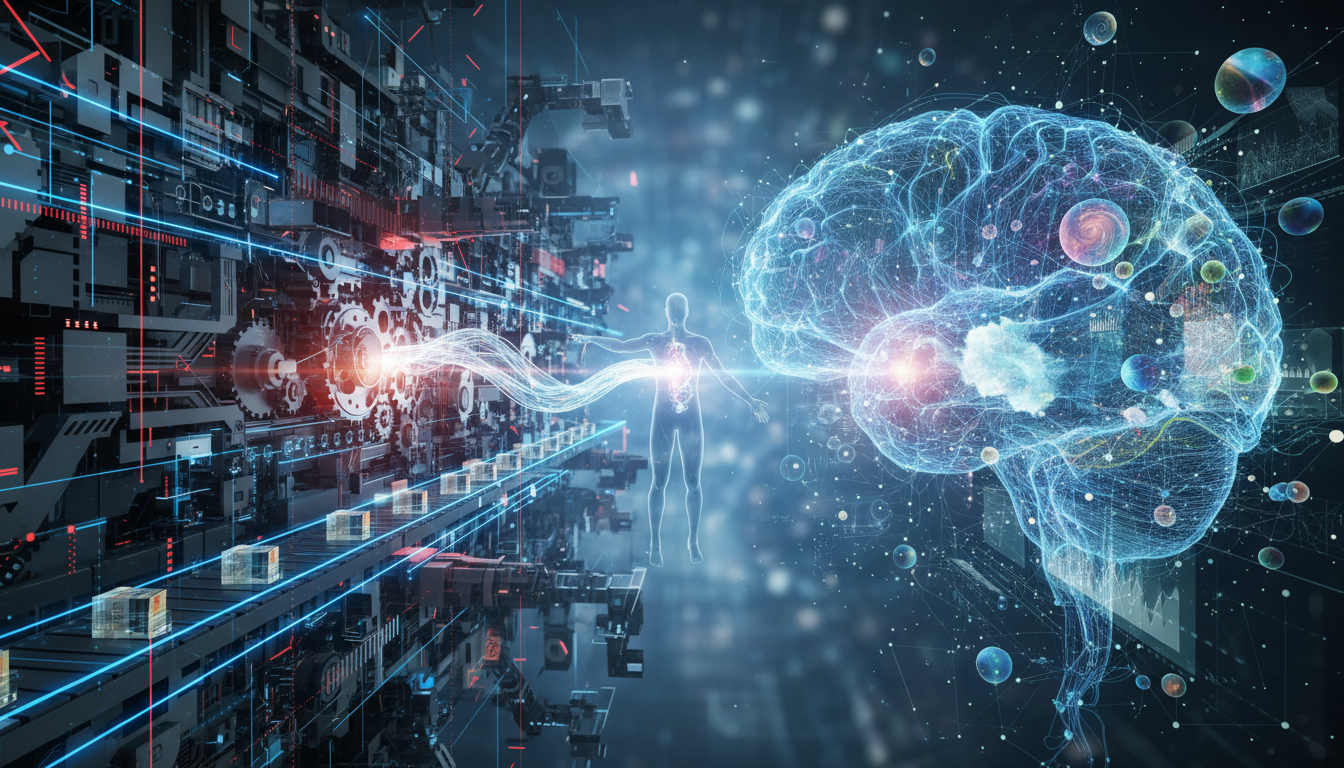
From Automation to Intelligence: The Technology Shift
Today, technology is entering a new phase. Businesses are moving beyond simple automation toward intelligent systems that can learn, adapt, and make decisions. This shift from automation to intelligence is redefining digital transformation across industries.
Organizations embracing this transition gain agility, insight, and competitive advantage through advanced technologies such as advanced technology solutions.
The Limits of Traditional Automation
As business environments grow more dynamic, rule-based systems fail to adapt quickly to changing conditions.
This limitation has pushed organizations to explore smarter solutions that go beyond basic process automation.
What Defines Intelligent Technology?
Unlike traditional systems, intelligent solutions can analyze patterns, learn from data, and improve outcomes over time.
This capability enables businesses to move from task execution to decision support and predictive insights using AI development solutions.
How AI and Machine Learning Drive the Shift
Machine learning models continuously improve by learning from new information, allowing systems to adapt to real-world conditions.
Businesses applying these technologies gain smarter automation across areas such as customer support, analytics, and operations, supported by AI-powered solutions.
Business Impact of Intelligent Automation
Businesses benefit from faster response times, predictive insights, and more personalized customer experiences.
Applications such as customer support services increasingly rely on intelligent systems to deliver efficient and consistent experiences.
Intelligence as a Competitive Advantage
This intelligence allows businesses to anticipate changes, optimize strategies, and respond faster than competitors.
The shift toward intelligence aligns closely with long-term digital transformation initiatives and cloud computing solutions.
Preparing for the Intelligent Future
Businesses must focus on data quality, integration, and scalable platforms to fully realize the benefits of intelligent systems.
Partnering with experts in advanced technologies ensures a smooth and effective transition.
Conclusion
Intelligent systems empower organizations to move beyond efficiency toward insight, adaptability, and innovation.
Ready to evolve from automation to intelligence? Get a Quote today and let Mahimedia Solutions help you build future-ready, intelligent technology solutions.